

The impact of poor e-waste management on finite resources and critical minerals
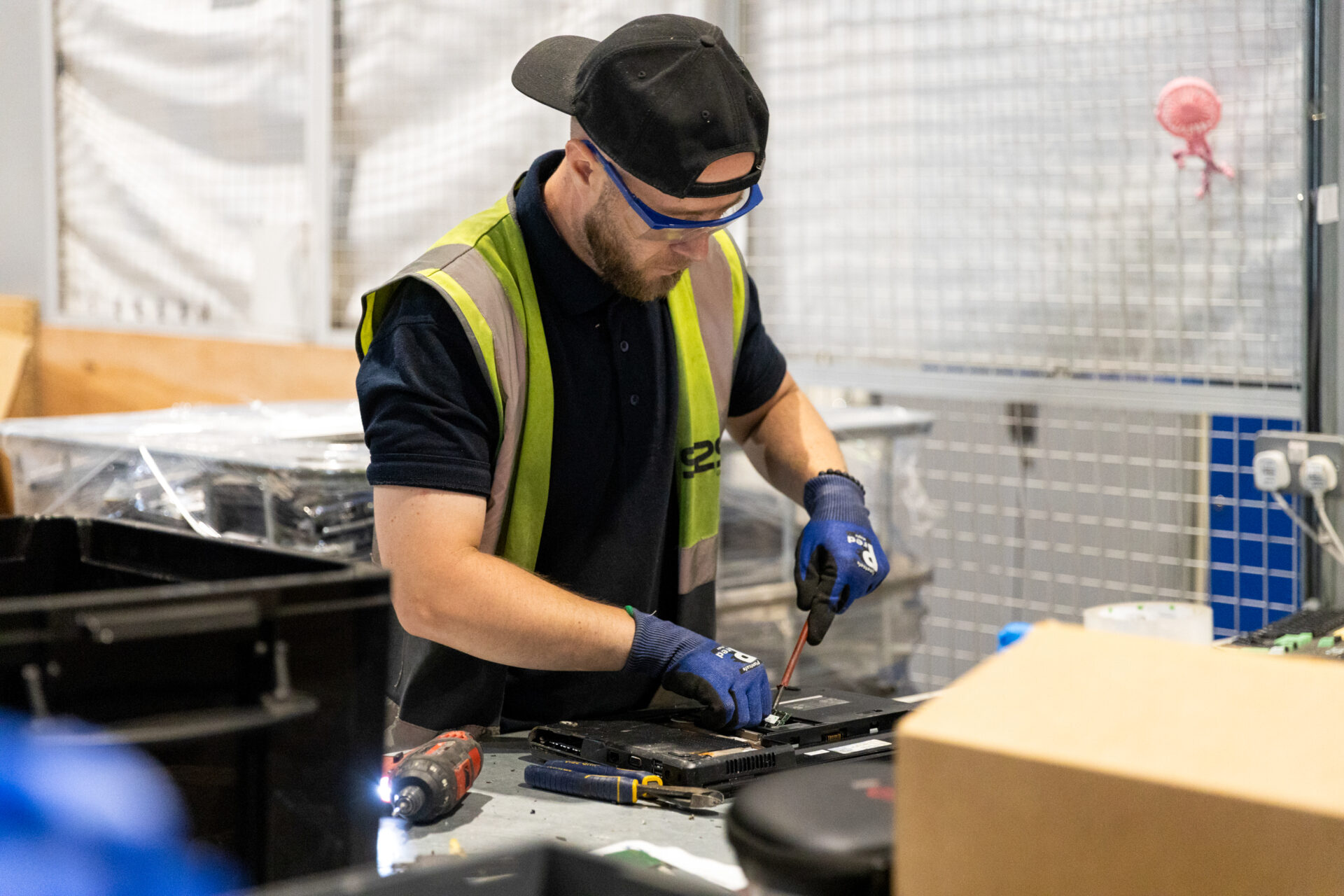
Electronic equipment is fundamental to almost every organisation across the world, from laptops and servers to mobile devices, networking equipment and specialist technology. But as businesses upgrade and replace technology, the volume of electronic waste (e-waste) continues to grow.
The issue lies not only in how much e-waste is produced, but also what happens to the valuable materials contained within it once destroyed.
Poor e-waste management often results in finite resources being lost from the economy, increasing demand for new raw materials and placing further pressure on global supply chains. So, how can businesses manage and protect these valuable materials?
E-waste is a valuable, but mostly forgotten source of materials
According to the Global E-waste Monitor 2024, 62 billion kilograms (kgs) of e-waste was generated globally in 2022. Only 22.3% was documented as formally collected and recycled in an environmentally responsible way. In 2025, almost 1,590 tonnes of material passed through our processing and recovery streams, highlighting the growing volume of material reaching its end of life in the UK alone.
Contained within this e-waste was an estimated 31 billion kgs of metals, amounting to a combined value of around £67.9 billion. This included approximately £14.1 billion of copper, £11.1 billion of gold and £11.9 billion of iron.
Redundant technology can therefore not simply be viewed as waste, but as a potential source of secondary raw materials which can be recycled back into the circular economy.
When equipment is reused, refurbished or appropriately recycled, materials can remain within the economy for longer. When it is poorly managed, those materials can be lost.
What are critical minerals?
Critical minerals are raw materials that are important to the economy but can also face supply risks. They are used across modern technologies, including electronics, renewable energy systems, batteries and communications infrastructure.
Electronic equipment can contain valuable materials, including cobalt, nickel, lithium, copper, gold, platinum and other rare earth elements.
The United Nations Environment Programme has highlighted the loss of scarce raw materials such as gold, platinum and cobalt as one consequence of poor e-waste management.
The problem is therefore bigger than individual devices reaching the end of their useful life. Businesses must understand that collectively, their production and poor management of e-waste leads to the loss of these materials, and also the opportunity to reduce our reliance on raw materials in future.
Keeping suitable equipment in use through refurbishment or reuse can extend its productive life. Once an asset has reached the end of its useful life, responsible recycling can recover materials that would otherwise be lost.
The circular economy starts before recycling
A circular approach to business operations is about keeping products, components and materials at their highest possible value for as long as possible.
The European Environment Agency identifies reuse, longer product lifetimes and high-quality recycling as important elements of a circular economy, helping to reduce our need for primary resources.
For businesses, this means considering the entire technology lifecycle rather than treating disposal as the final step. Organisations should analyse whether assets can be redeployed, refurbished or recycled to maximise the material that is recovered from its disposal.
By changing that fundamental last step in an IT asset’s lifecycle, businesses can reduce their own carbon footprint and support their ESG reporting, while also collectively helping to achieve a circular economy.
What can businesses do differently?
A responsible IT asset disposal (ITAD) strategy can help organisations make better decisions at the end of an asset’s useful life.
This starts with identifying equipment that can be reused or refurbished before considering recycling. This has been at the core of our operations for almost 40 years, ensuring businesses nationwide make informed, considerate choices with their end-of-life technology.
For assets that cannot be reused, secure collection, appropriate treatment and documented recycling processes help ensure materials are recovered responsibly.
Visibility throughout the process is also important. Businesses should be able to demonstrate how assets were handled and ensure they are processed in a compliant and environmentally friendly manner.
At S2S Group, our approach combines secure ITAD with reuse, refurbishment and WEEE recycling, helping businesses maximise the remaining value of their technology while reducing unnecessary waste.
Turning e-waste into a resource
Every laptop, server, mobile device or data centre contains materials that have already been extracted, processed and incorporated into a product. Recovering those valuable materials can help reduce the need for further extraction of raw materials and support a more circular use of finite resources.
For businesses, responsible e-waste management is about more than meeting environmental obligations. They should recognise the resource value within their own redundant technology and ensure those materials do not simply become waste. To find out more about how S2S Group can support your business with its redundant technology, get in touch with our experts today.